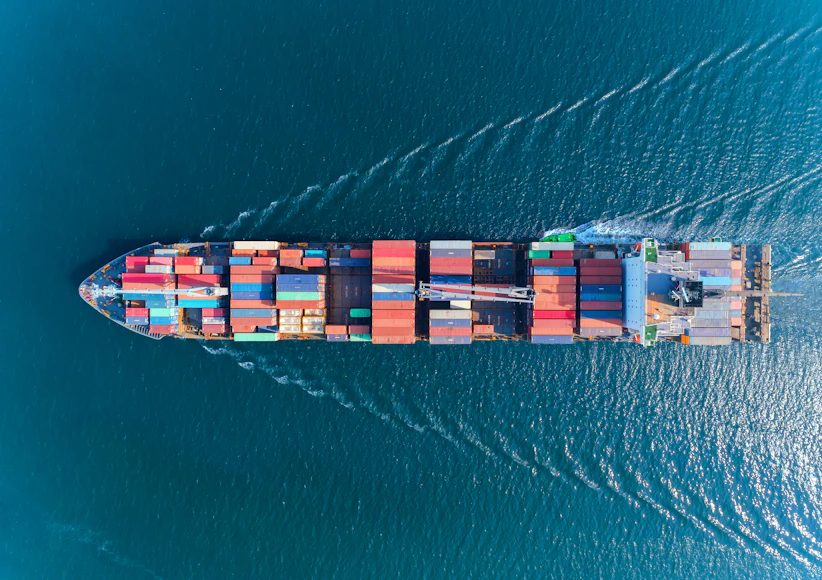
The Global Door Is Open — Are You Walking Through It?
Picture this: A garment manufacturer from Tirupur with 40 workers produces high-quality knitwear. His domestic orders fluctuate with the seasons. A buyer from Germany contacts him through a trade portal — offering a contract worth five times his monthly domestic revenue. He’s thrilled, until reality sets in: he doesn’t have an IEC code, he doesn’t know which documents to prepare, he has no idea how to price in Euros, and he’s never dealt with international customs clearance in his life.
He hesitates. He delays. The German buyer moves on to a competitor in Bangladesh.
This story repeats itself thousands of times across India every year. Capable manufacturers and SMEs with world-class products are losing global opportunities — not because of inferior quality, but because of the knowledge and system gap between domestic selling and international trade.
The good news? That gap is bridgeable. And this guide will show you exactly how.
_____________________________________________________________________________________________________
Why Indian SMEs Are Ready for the Global Stage
Indian SMEs are not small players in the global trade story — they are its backbone. Consider these powerful numbers:
- 🏭 MSMEs contribute 45.79% of India’s total exports
- 💼 The sector employs over 20.39 crore people across manufacturing and services
- 🎯 India’s government has set an export target of $2 trillion by 2030
- 🌍 In 2025, India exports to 200+ countries across virtually every product category
From handloom textiles to precision engineering, from organic spices to generic pharmaceuticals — India’s SME sector produces goods the world genuinely wants. The question is no longer whether Indian SMEs can go global, but how fast they can build the right systems to scale.
4 Proven Market Entry Strategies for Indian SMEs
Not all businesses should enter global markets the same way. Your entry strategy depends on your capital, product type, risk appetite, and long-term vision. Here are the four primary routes:
1. 📦 Direct Exporting — The Most Accessible Starting Point
Direct exporting means shipping your product directly to a foreign buyer — whether through a B2B marketplace, trade referral, or your own outreach. It requires minimal upfront investment and lets you test international demand before committing significant resources.
Best for: Manufacturers, processors, and traders with a ready product and some working capital.
2. 🤝 Indirect Exporting via Trading Houses or Merchant Exporters
If you’re not ready to handle international logistics and compliance yourself, you can sell to an Export Trading Company (ETC) or Merchant Exporter, who takes responsibility for all the export processes. You receive a domestic payment while someone else handles the global supply chain.
Best for: Manufacturers who want to “test the export waters” without handling compliance.
3. 🔗 Licensing, Franchising, or Joint Ventures
Once you have an established brand or a unique product/process, licensing or joint ventures allow you to expand internationally with a local partner who knows the market. This reduces risk considerably and gives you access to local distribution networks and cultural insight.
Best for: Businesses with intellectual property, strong brands, or proprietary technology.
4. 🏢 Direct Foreign Investment — Setting Up Operations Abroad
The most advanced market entry mode — setting up a subsidiary, branch office, or representative office in the target country. This offers maximum control and long-term brand building but requires significant capital and regulatory compliance in both India and the host country.
Best for: Established exporters ready for serious long-term global expansion.
_____________________________________________________________________________________________________
Step-by-Step Guide: How Indian SMEs Can Enter International Markets
Step 1: Conduct Rigorous Market Research
Before you ship a single unit, invest time in understanding your target market:
- Which countries have the highest demand for your product category?
- What are the import duties and regulations in those countries?
- Who are your main competitors — local producers or other exporting nations?
- What certifications or standards does your product need to meet? (e.g., CE marking for Europe, FDA for the USA)
- What is the buying behaviour and cultural preference of your target customer?
Use resources like the Indian Trade Portal (indiantradeportal.in), ITC Trade Map, and DGFT data to research market demand, HS code trends, and country-specific import regulations.
_____________________________________________________________________________________________________
Step 2: Select Your Priority Market Strategically
Don’t try to export to every country at once. Pick one market, dominate it, then diversify. Use these selection criteria:
| Criteria | Why It Matters |
|---|---|
| Market size & demand | Indicates revenue potential |
| Import duties & trade agreements | Affects your price competitiveness |
| Cultural & language similarity | Simplifies communication and marketing |
| Payment risk & buyer reliability | Protects your cash flow |
| Competition intensity | Determines ease of market penetration |
| Logistics connectivity | Impacts cost and delivery time |
Tip: India has Free Trade Agreements (FTAs) with several countries including UAE (CEPA), Australia, and ASEAN nations — giving Indian exporters a tariff advantage in these markets.
_____________________________________________________________________________________________________
Step 3: Ensure Full Regulatory Compliance in India
Before you can legally export, you need:
- ✅ IEC (Import Export Code) — issued by DGFT, ₹500 fee, lifetime validity
- ✅ GST Registration — mandatory; exports are zero-rated (claim full ITC refunds)
- ✅ RCMC (Registration cum Membership Certificate) — from relevant Export Promotion Council
- ✅ AD Code Registration — at your designated customs port via your bank
- ✅ MSME/Udyam Registration — unlocks government schemes, subsidies, and credit facilities
_____________________________________________________________________________________________________
Step 4: Master Export Documentation
Export documentation is the nervous system of your trade operation. One missing or incorrect document can hold your shipment at customs for days — costing you money, your buyer’s trust, and future orders.
Core export documents every SME must know:
- Commercial Invoice & Packing List
- Shipping Bill (filed via ICEGATE)
- Bill of Lading / Airway Bill
- Certificate of Origin (COO)
- Letter of Credit (LC) or payment confirmation
- Insurance Certificate
- Quality/Inspection Certificate (where required)
- Phytosanitary / Health Certificates (for food/agri products)
_____________________________________________________________________________________________________
Step 5: Build Your Logistics and Payment Infrastructure
- Partner with a licensed Customs House Agent (CHA) for hassle-free customs clearance
- Work with experienced freight forwarders for sea/air/courier logistics
- Understand Incoterms (FOB, CIF, DDP, EXW) to define cost and risk boundaries clearly
- Set up export credit insurance through ECGC to protect against buyer default
- Open a Foreign Currency Account (EEFC) to retain export earnings in foreign currency
_____________________________________________________________________________________________________
Step 6: Find and Qualify International Buyers
The fastest and most reliable buyer sourcing channels for Indian SMEs:
- 🌐 B2B Platforms: Alibaba, IndiaMART Global, TradeIndia, Global Sources, Kompass
- 🏛️ Export Promotion Councils: Buyer-seller meets, trade missions, international delegations
- 📊 Trade Intelligence Tools: Access actual import/export data to identify active buyers
- 🤝 International Trade Fairs: Canton Fair, Ambiente, Gulfood, Hannover Messe
- 💻 LinkedIn & Digital Marketing: A professional website and active LinkedIn presence are increasingly how international buyers discover Indian suppliers
_____________________________________________________________________________________________________
Real-World Example: The Rise of India’s MSME Exporters
India’s MSME sector is already producing global champions. Consider the story of engineering goods manufacturers and textile clusters across India who have leveraged EEPC India and AEPC trade delegations to enter markets in Germany, Japan, and the United States.
A compelling example is the boAt brand journey — starting as a small consumer electronics SME focused on affordable audio accessories, it built systems, quality, and export capacity that enabled international expansion into global markets.
The World Economic Forum also notes that through e-commerce and TradeTech solutions, Indian SMEs have the potential to reach $1 trillion in export contributions by 2030 — a figure that will only be achieved if more small businesses take the leap into global markets.
_____________________________________________________________________________________________________
7 Common Mistakes Indian SMEs Make When Entering International Markets
Even the best products fail globally when businesses make these avoidable errors:
- ❌ Skipping buyer verification — Shipping to unverified buyers and losing payment entirely
- ❌ Incorrect documentation — A single wrong HS Code or missing certificate can freeze a shipment
- ❌ Underpricing due to poor costing — Not accounting for freight, duties, packaging, and agent fees
- ❌ Choosing the wrong market first — Targeting highly regulated or hyper-competitive markets before gaining experience
- ❌ Ignoring packaging and labeling standards — Many countries have strict rules on language, measurements, and warnings
- ❌ Neglecting trade finance options — Running out of working capital mid-cycle because of long payment cycles
- ❌ Going it alone without expert guidance — Trying to self-navigate compliance, documentation, and logistics without a mentor or consultant leads to costly mistakes and missed opportunities
_____________________________________________________________________________________________________
Government Schemes Every Indian SME Exporter Must Leverage in 2025
India’s government has launched an unprecedented level of financial support for MSME exporters. Here’s what you need to know:
🏛️ Export Promotion Mission (EPM) — ₹25,060 Crore Initiative
The Union Cabinet approved this landmark scheme in November 2025, running from 2025–2031. It targets MSMEs, first-time exporters, and labour-intensive sectors through two sub-schemes:
- Niryat Protsahan — Interest subvention on pre- and post-shipment credit, export factoring, and collateral-free export credit
- Niryat Disha — Quality testing/certification support, international branding assistance, trade fair participation, and logistics subsidies for remote districts
💰 Credit Guarantee Scheme for Exporters (CGSE)
Provides up to ₹20,000 crore in additional credit support for eligible exporters — including 100% credit guarantee coverage and collateral-free working capital of up to 20% of sanctioned export limits.
🔄 RoDTEP (Remission of Duties and Taxes on Exported Products)
Allows exporters to reclaim embedded taxes and duties in the production and distribution chain — directly improving profit margins on international sales. Full benefits are being restored from April 1, 2026.
🛡️ ECGC Export Credit Insurance
Protects Indian exporters against the risk of non-payment by foreign buyers — essential for SMEs extending credit terms to new international buyers.
_____________________________________________________________________________________________________
Why Hiring an Export-Import Consultant Is a Smart Investment for SMEs
Many SMEs attempt to enter global markets alone — and either fail silently or burn months on compliance errors that a consultant would resolve in days. Here’s the real value a professional EXIM consultant brings to your business:
✅ Market Intelligence — Identifying the right target market, the right buyer profile, and the right pricing strategy for your specific product
✅ End-to-End Documentation — Preparing flawless export documents that clear customs without delays or rejections
✅ Regulatory Compliance — Navigating IEC, RCMC, AD Code, GST, and country-specific certifications correctly from the start
✅ Logistics Optimization — Selecting the most cost-effective shipping routes, Incoterms, and freight forwarding partners
✅ Buyer Sourcing & Verification — Connecting you with genuine, creditworthy international buyers and screening against fraud
✅ Government Incentive Maximization — Ensuring you claim every benefit you’re entitled to — RoDTEP, duty drawback, ECGC, EPM — down to the last rupee
✅ Training & Capability Building — Empowering your internal team with the EXIM knowledge to operate independently over time
In short, the right EXIM consultant doesn’t cost you money — they make you money by accelerating your global entry, protecting your shipments, and unlocking incentives you didn’t know existed.
_____________________________________________________________________________________________________
Practical Tips for Indian SME Beginners Going Global
Before you take your first step into international trade, keep these proven tips front of mind:
- 📌 Start with neighbouring markets or FTA partners — UAE, ASEAN, and Australia offer lower tariff barriers for Indian goods
- 📌 Get MSME/Udyam registration first — it unlocks priority credit, government schemes, and EPC membership
- 📌 Invest in product quality certifications early — ISO, BIS, FSSAI, CE, or FDA depending on your sector
- 📌 Build a simple, professional export website — international buyers research online before they contact you
- 📌 Never ship without a clear payment arrangement — use LC, advance payment, or ECGC-backed DP terms
- 📌 Join your relevant Export Promotion Council — the network, trade fair access, and policy updates alone are worth it
- 📌 Keep your documentation organized and digital — a paperless workflow accelerates customs clearance and reduces errors
_____________________________________________________________________________________________________
Conclusion: The Global Market Is Waiting for Indian SMEs
India’s SME sector is not just ready for the global stage — it is already on it, and the opportunity ahead has never been larger. With robust government support, a growing network of trade agreements, rising global demand for Indian-made products, and digital tools that make buyer discovery easier than ever, the barriers to international trade for Indian SMEs have never been lower.
What separates the SMEs that succeed globally from those that stay stuck domestically is not the quality of their products — it’s the quality of their strategy, systems, and support.
Your global journey begins with the right first step. Make it count.
_____________________________________________________________________________________________________
📣 Take Your SME Global with Blueman Exim Enterprise
At Blueman Exim Enterprise, we specialize in helping Indian SMEs, manufacturers, and first-time exporters navigate the complete journey of international market entry — from regulatory compliance and documentation to buyer sourcing, market strategy, and customs clearance.
Whether you’re exporting for the first time or scaling an existing trade operation to new geographies, our team of experienced EXIM professionals provides the guidance, tools, and connections that turn global ambitions into real revenue.
🌐 Visit: www.bluemanexim.com
📞 Book your FREE consultation today and let us map out your international market entry strategy.
“Don’t wait for the world to find you. Go to the world — with Blueman Exim Enterprise as your guide.”